
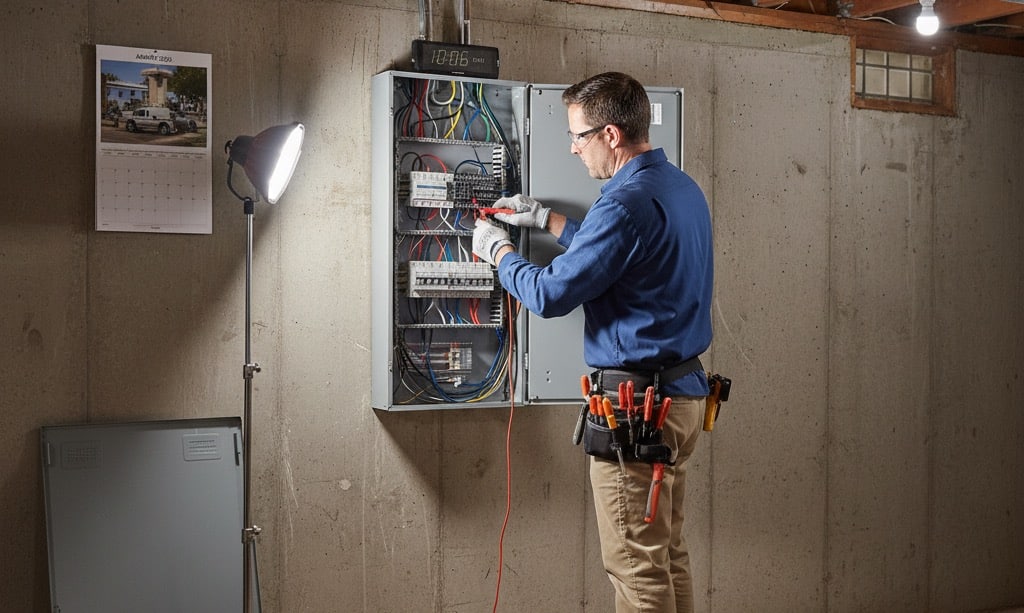
Understanding the Differences and Safety Measures for Low Voltage and High Voltage Wiring
When people hear the word electrical wiring, they usually imagine sparks, breaker panels, or maybe that one outlet that never seems to work right. But not all wiring in your home is the same—and understanding the difference between low voltage wiring and high voltage wiring can help you stay safer, avoid costly mistakes, and spot problems before they turn into real hazards.
Whether you’re renovating, adding smart devices, or just living in an older home, this guide breaks things down in plain English. No engineering degree required.
What Is High Voltage Wiring?
High voltage wiring is what powers the heavy-duty parts of your home—the things that actually run it.
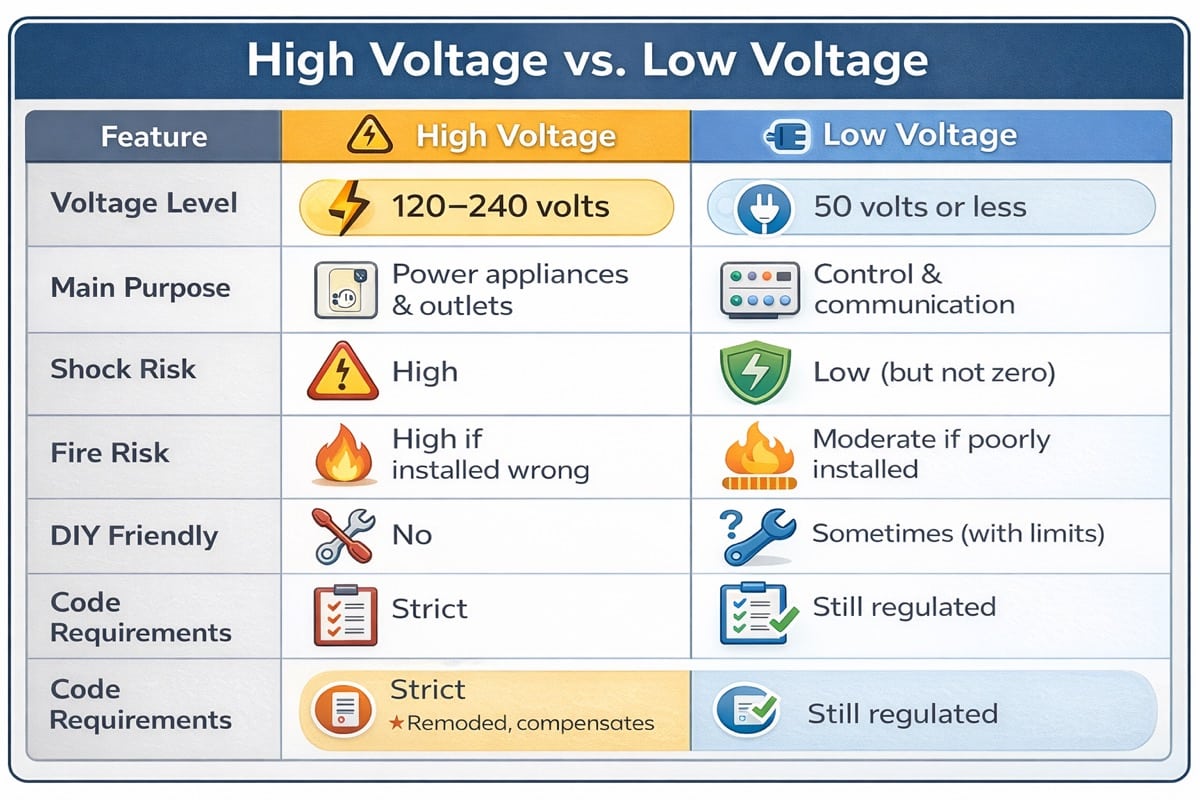
In residential homes, high voltage usually means 120 volts or 240 volts, and it’s used for:
- Wall outlets and switches
- Lighting circuits
- Kitchen appliances (ovens, ranges, dishwashers)
- HVAC systems
- Water heaters
- Dryers
- Electrical panels and breakers
This type of wiring carries enough electricity to cause serious injury, fires, or death if installed incorrectly or damaged.
Why High Voltage Wiring Is Risky
High voltage wiring is dangerous because:
- A single mistake can cause shock or electrocution
- Loose or overloaded wires can overheat and start fires
- Incorrect breaker sizing can allow wires to burn without tripping
- Aging insulation can crack and expose live conductors
This is why high voltage electrical work should never be a DIY project unless you are a licensed electrician.
What Is Low Voltage Wiring?
Low voltage wiring typically carries 50 volts or less. It’s used for systems that don’t require much power but still play an important role in your home.
Common low voltage systems include:
- Doorbells
- Thermostats
- Security systems
- Smart home controls
- Internet and Ethernet wiring
- Cable TV and satellite
- Landscape lighting
- Intercoms
- Smoke detectors (some types)
Low voltage wiring won’t usually electrocute you, but that doesn’t mean it’s risk-free.
Common Misconception: “Low Voltage Means No Danger”
Low voltage wiring can still cause problems when:
- It’s run too close to high voltage wiring
- It’s stapled or pinched incorrectly
- It’s poorly grounded
- Cheap or incorrect cable is used
Mistakes can lead to system failures, interference, overheating, or even fire risks when low and high voltage wiring mix improperly.
Key Differences Between Low and High Voltage Wiring
Things to Be Careful About With High Voltage Wiring
1. Overloaded Circuits
Plugging too many devices into one circuit can overheat wires behind the walls—often without visible warning signs.
2. Aluminum Wiring in Older Homes
Homes built in the 1960s and 1970s may have aluminum wiring, which expands and contracts more than copper and increases fire risk if not properly upgraded.
3. DIY Electrical Work
Incorrect wire sizing, loose connections, or improper grounding are some of the top causes of electrical fires.
4. Improper GFCI and AFCI Protection
Bathrooms, kitchens, garages, basements, and outdoor outlets need special protection. Missing or outdated protection is a serious safety issue.
Things to Be Careful About With Low Voltage Wiring
1. Mixing Low and High Voltage
Low voltage wires should never share the same electrical box or conduit unless specifically designed to do so.
2. Poor Cable Quality
Cheap or incorrect cable can degrade quickly, especially in attics or outdoor environments.
3. Lack of Surge Protection
Low voltage systems like security cameras and smart devices are vulnerable to power surges.
4. Future Expansion Problems
Improper installation today can make upgrades or troubleshooting difficult later.
Why Home Safety Electrical Inspections Are So Important
Most electrical dangers don’t announce themselves. They hide behind walls, inside panels, and in attics—until something goes wrong.
A professional home electrical safety inspection helps identify problems before they become emergencies.
What an Electrical Safety Inspection Can Catch
- Loose or overheating connections
- Outdated breaker panels
- Overloaded circuits
- Improper grounding or bonding
- Hidden fire hazards
- Unsafe DIY work by previous owners
- Failing outlets and switches
- Code violations
- Aging or damaged wiring
Many homeowners are shocked to learn their home has issues—even when everything “seems fine.”
When Should You Schedule a Home Electrical Inspection?
You should strongly consider an inspection if:
- Your home is 20+ years old
- You’re buying or selling a home
- You experience flickering lights or frequent breaker trips
- You smell burning or notice warm outlets
- You’re adding appliances, EV chargers, or renovations
- You’re upgrading to smart home systems
- Your home still has an older fuse box or outdated panel
Why Professional Inspections Matter More Than Ever
Modern homes use far more electricity than homes did 30–40 years ago. Between HVAC upgrades, home offices, electric vehicles, and smart devices, older wiring systems can easily become overwhelmed.
A professional inspection doesn’t just point out problems—it gives you a clear, prioritized plan to improve safety without unnecessary upgrades.
This is where experienced, licensed electricians truly make a difference.
FAQs: Low & High Voltage Wiring and Home Safety
Is low voltage wiring safe to install myself?
Some low voltage projects may be DIY-friendly, but mistakes can still cause problems. Always follow local codes—and when in doubt, call a professional.
Can low voltage wiring cause a fire?
Yes, especially if it’s installed improperly, run near high voltage wiring, or uses the wrong cable.
Why do outlets feel warm?
Warm outlets can indicate loose connections, overloaded circuits, or failing devices. This should be inspected immediately.
How often should a home electrical inspection be done?
Every 5–10 years for most homes, or sooner if the home is older or undergoing upgrades.
Does a safety inspection mean I must upgrade everything?
No. A good electrician explains what’s urgent, what can wait, and what’s optional.
Can older wiring still be safe?
Sometimes—but only if it’s in good condition, properly protected, and not overloaded. An inspection is the only way to know.
What’s the biggest electrical danger homeowners ignore?
Loose connections behind outlets and panels. They’re invisible but are a leading cause of electrical fires.
Who should perform an electrical safety inspection?
Always use licensed, experienced electricians who specialize in residential systems and safety evaluations.
 Root Electric licensed electricians can help you do the job the right way—and do it safely.
Final Thoughts: Safety First, Always
Low voltage and high voltage wiring both play critical roles in your home—but when either one is installed incorrectly or left unchecked, the risks can be serious.
A professional electrical safety inspection isn’t about fear—it’s about peace of mind. It helps you protect your family, your home, and your investment.
If you want confidence that your electrical system is safe, up to code, and ready for modern living, working with experienced professionals like Root Electric makes all the difference.
Safety first. Customer service always.
REQUEST A QUOTE
Satisfaction / Safety First Since 1986